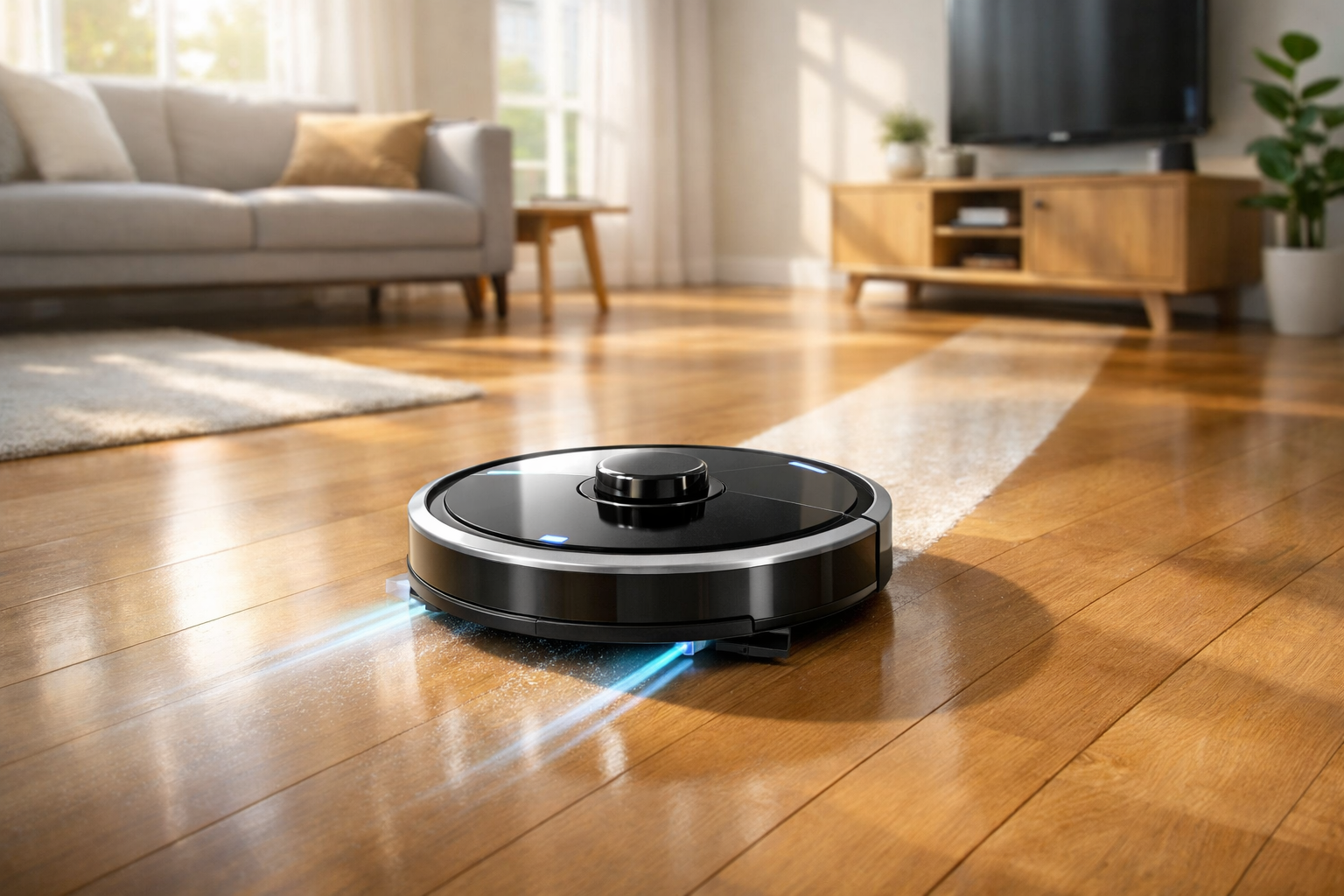
Let’s be honest—buying a robot vacuum feels like hiring a tiny, tireless maid. You unbox it, connect it to your Wi-Fi, and watch it zip around your living room, picking up crumbs you didn’t even know were there. But after the initial excitement fades, a very practical question pops up: How often should I actually run this thing?
If you run it too much, are you going to wear out the battery? If you don’t run it enough, what was the point of buying it in the first place?
I’ve tested dozens of robot vacuums over the years, from budget-friendly models to high-end self-emptying beasts. I’ve seen what happens when you let them run wild every day, and I’ve seen the dusty consequences of forgetting about them for a week.
In this guide, I’m going to break down exactly how often you should run your robot vacuum based on your home, your lifestyle, and your floors. No complicated jargon—just simple, real-world advice to keep your floors clean and your robot running smoothly.
Quick Answer: How Often Should a Robot Vacuum Run?
If you want the short version, here is the general rule of thumb:
- For most homes: Run your robot vacuum 3 to 4 times a week.
- If you have pets or kids: Run it every single day.
- If you live alone and are rarely home: Running it 1 to 2 times a week is usually enough.
The sweet spot for most people is every other day. This keeps dust from building up without putting unnecessary wear and tear on the machine. But to get the best results, you need to look at a few specific factors in your home.
4 Things That Change How Often You Should Vacuum
Not every home is the same. A single person living in a small apartment doesn’t need to vacuum as much as a family of five with three Golden Retrievers. Here is what you need to consider when setting your cleaning schedule.
1. Do You Have Pets?
This is the biggest factor. If you have dogs or cats that shed, your robot vacuum is going to be your best friend. Pet hair has a sneaky way of floating into corners and weaving itself into your rugs.
- My Experience: When I fostered a heavy-shedding dog, I had to run my robot vacuum every single day. If I skipped a day, tumbleweeds of fur would start rolling across the hardwood floors.
- Recommendation: Daily runs are a must for pet owners. If your pet is blowing their coat (shedding heavily in spring or fall), you might even need to run it twice a day in high-traffic areas.
2. What Kind of Floors Do You Have?
Different floors hide dirt differently.
- Hardwood and Tile: These floors show everything. Every speck of dust, every crumb, and every stray hair is visible. You will likely want to run your robot vacuum 3 to 4 times a week to keep hard floors looking pristine.
- Carpets and Rugs: Carpets are great at hiding dirt, which is actually a bad thing. Dirt gets trapped deep in the fibers, which can wear out the carpet over time. You should run your robot vacuum over carpets at least 2 to 3 times a week to pull up that hidden dust.
3. How Many People Live in Your Home?
More feet mean more dirt. It’s that simple.
- High Traffic: If you have kids running in and out of the house, bringing in dirt from the yard, you need to vacuum more often. Aim for 4 to 7 times a week.
- Low Traffic: If you live alone, work at an office all day, and take your shoes off at the door, your floors stay much cleaner. You can easily get away with running your robot vacuum just 1 or 2 times a week.
4. Do You Have Allergies?
If you or someone in your family suffers from dust or pollen allergies, your robot vacuum can be a lifesaver. Running it frequently helps remove allergens from the floor before they get kicked up into the air.
- Recommendation: Run it daily, especially during allergy season. Make sure your robot vacuum has a HEPA filter, and remember to clean or replace that filter regularly!
The Pros and Cons of Running Your Robot Vacuum Every Day
Is it okay to run a robot vacuum every day? Yes, absolutely. These machines are designed for regular use. But there are some trade-offs you should know about.
The Pros of Daily Vacuuming
- Always Clean Floors: You never have to worry about unexpected guests seeing a dirty floor.
- Less Deep Cleaning: Because the robot maintains a baseline level of clean, you won’t have to drag out your heavy upright vacuum nearly as often.
- Better Air Quality: Daily vacuuming picks up dust and dander before it circulates in the air.
The Cons of Daily Vacuuming
- More Maintenance: If you run it every day, the dustbin fills up faster, the brushes get tangled quicker, and the filters get dirty sooner. You will have to empty and clean the robot more often.
- Wear and Tear: Running any machine daily will wear out its parts faster. You will need to buy replacement brushes and filters more frequently.
- Battery Degradation: Like a smartphone, a robot vacuum battery has a limited number of charge cycles. Running it daily will slowly degrade the battery over a few years.
Step-by-Step Guide: How to Set the Perfect Cleaning Schedule
Most modern robot vacuums come with a smartphone app that lets you set a schedule. Here is how I recommend setting yours up for the best balance of cleanliness and convenience.
Step 1: Start with a Clean Slate
Before you set a schedule, do a deep clean of your house with your regular, full-sized vacuum. Robot vacuums are great at maintaining clean floors, but they can struggle if they are dropped into a room that hasn’t been vacuumed in a month.
Step 2: Map Your Home
Let your robot vacuum run a mapping cycle. Once it has a map of your house, you can divide it into rooms or zones. This is a game-changer.
Step 3: Create Zone-Specific Schedules
You don’t have to clean the whole house every time. Here is a sample schedule that works for most people:
- Kitchen and Dining Room: Run daily (after dinner) to pick up crumbs.
- Living Room and Hallways: Run 3 times a week (e.g., Monday, Wednesday, Friday).
- Bedrooms and Guest Rooms: Run 1 to 2 times a week.
Step 4: Pick the Right Time
The best time to run your robot vacuum is when you aren’t in the room.
- If you work outside the home, schedule it to run mid-morning.
- If you work from home, schedule it to clean the living areas while you are in your office, and vice versa.
- Avoid running it at night. Robot vacuums need light to navigate properly, and they can be noisy.
Common Mistakes People Make with Robot Vacuums
Even the smartest robot vacuum needs a little help from its human. Here are the most common mistakes I see people make that ruin their cleaning routine.
1. Forgetting to Empty the Dustbin
If you don’t have a self-emptying base, you need to empty the dustbin manually. If the bin is full, the vacuum will just push dirt around your house.
- The Fix: Empty the bin after every single run. Make it a habit.
2. Not Picking Up Clutter
Robot vacuums are getting better at avoiding obstacles, but they still hate phone chargers, shoelaces, and stray socks. If your robot sucks up a cable, it will get stuck and stop cleaning.
- The Fix: Do a quick 2-minute sweep of the floor before the robot runs. Pick up cords, toys, and clothes.
3. Ignoring Maintenance
A robot vacuum is like a car; it needs regular tune-ups. If the main brush is wrapped tightly in hair, it can’t sweep up dirt. If the filter is clogged, the suction power drops to zero.
- The Fix: Once a week, flip the robot over. Cut away any tangled hair on the brushes, wipe the sensors with a dry cloth, and tap the dust out of the filter.
Robot Vacuum Maintenance Schedule: Keep It Running Like New
To make sure your robot vacuum actually cleans when it runs, you need to maintain it. Here is a simple schedule to follow:
| Part to Clean | How Often to Clean It | How Often to Replace It |
|---|---|---|
| Dustbin | After every use (if no auto-empty base) | N/A |
| Main Brush | Once a week (cut away tangled hair) | Every 6 to 12 months |
| Side Brushes | Once a week | Every 3 to 6 months |
| Filter | Once a week (tap out dust) | Every 2 to 3 months |
| Sensors & Contacts | Once a month (wipe with dry cloth) | N/A |
Note: If you have pets, you should check the brushes and filters twice a week.
Best Options for Different Users
If you are reading this and realizing your current vacuum isn’t cutting it, or if you are looking to buy your first one, here is a quick breakdown of what to look for based on your needs.
- Best for Pet Owners: Look for a robot vacuum with a self-emptying base and dual rubber brushes (like many high-end models). Rubber brushes don’t tangle with hair nearly as badly as bristle brushes.
- Best for Large Homes: You need a robot with “Recharge and Resume” capabilities. This means if the battery runs low, it will go back to the dock, charge up, and then finish the job where it left off.
- Best for Busy Families: Get a model with advanced obstacle avoidance. These use cameras or lasers to see and avoid toys, shoes, and even pet waste, so you don’t have to pre-clean the floors as strictly.
Frequently Asked Questions (FAQ)
1. Can I leave my robot vacuum plugged in all the time?
Yes. Robot vacuums are designed to live on their charging docks. Once the battery is full, the dock stops sending power, so it won’t overcharge. Leaving it on the dock ensures it is always ready for its next scheduled run.
2. Do robot vacuums use a lot of electricity?
No, they are very energy efficient. Charging a robot vacuum uses a tiny amount of electricity—usually less than what it takes to run a traditional upright vacuum for 15 minutes.
3. Should I run my robot vacuum in the dark?
It depends on the navigation system. If your robot uses a camera (vSLAM) to navigate, it needs light to see and will get lost in the dark. If it uses lasers (LiDAR), it can navigate perfectly in pitch black. Check your manual to be sure.
4. How long do robot vacuums usually last?
With proper maintenance, a good quality robot vacuum should last between 4 to 6 years. You will likely need to replace the battery after 2 or 3 years, as it will lose its ability to hold a full charge.
5. Will a robot vacuum damage my hardwood floors?
No. The wheels are made of soft rubber, and the brushes are designed to be gentle. However, if a hard piece of debris (like a small rock) gets stuck under the wheel, it could potentially cause a scratch. This is rare, but it’s another reason to keep the robot clean.
6. Do I still need a normal vacuum if I have a robot?
Yes. Robot vacuums are fantastic for daily maintenance, but they don’t have the deep-cleaning suction power of a full-sized plug-in vacuum. You will still need a regular vacuum for deep cleaning carpets, stairs, and furniture.
Final Verdict: Find Your Rhythm
So, how often should a robot vacuum run? The truth is, there is no single magic number. It all depends on your home.
Start by scheduling it to run three times a week. See how your floors look. If you are still seeing dust bunnies or pet hair, bump it up to four or five times a week. If the floors look great and the dustbin is barely full, you can dial it back.
The beauty of a robot vacuum is that it does the hard work for you. Set a schedule that fits your life, keep up with the basic maintenance, and enjoy the feeling of walking barefoot on clean floors every single day.
Leave a Reply